


Conservation framing: What it is and why it matters for art and artefacts
Honouring the stories that art and artefacts carry, and protecting them for the years ahead.
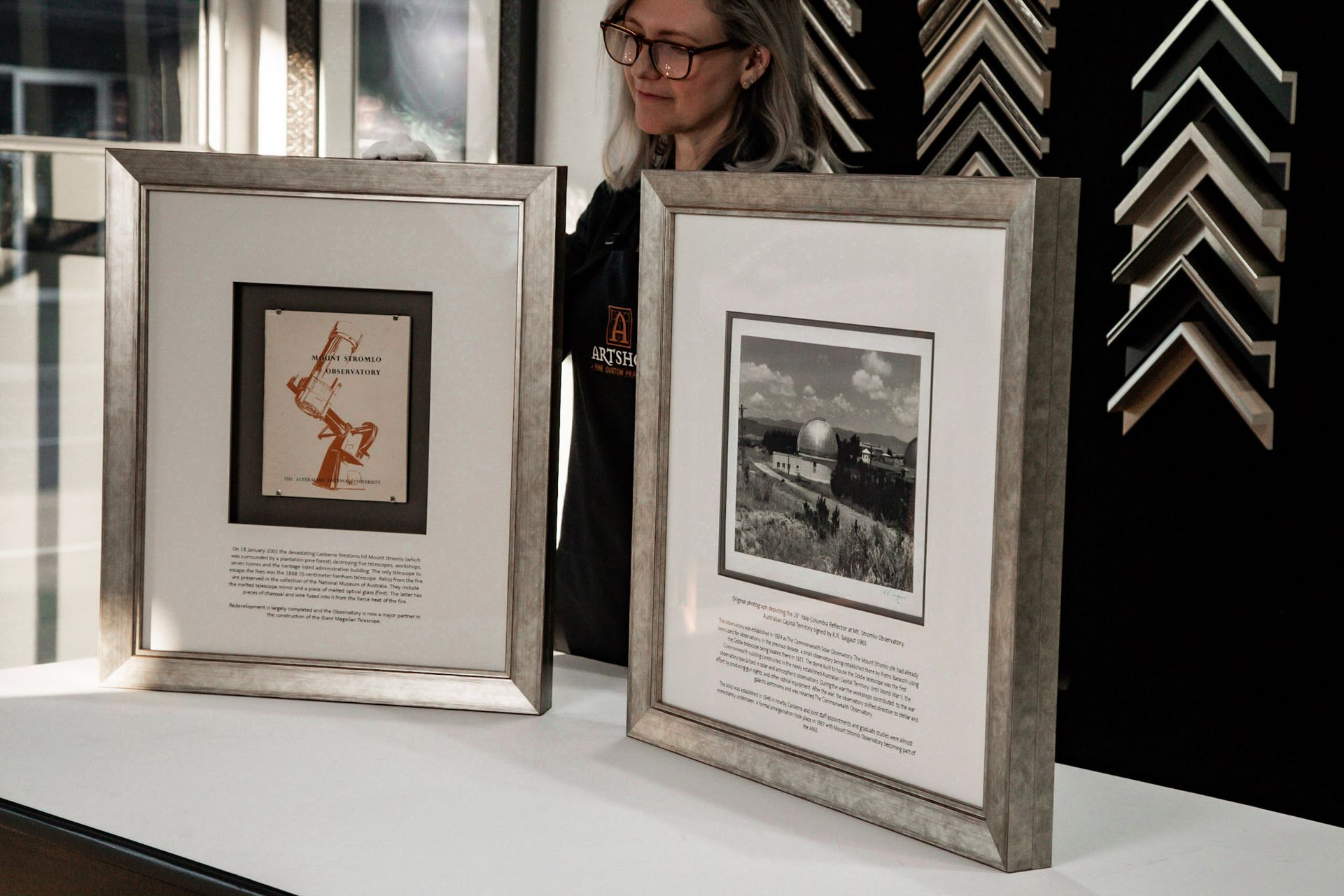
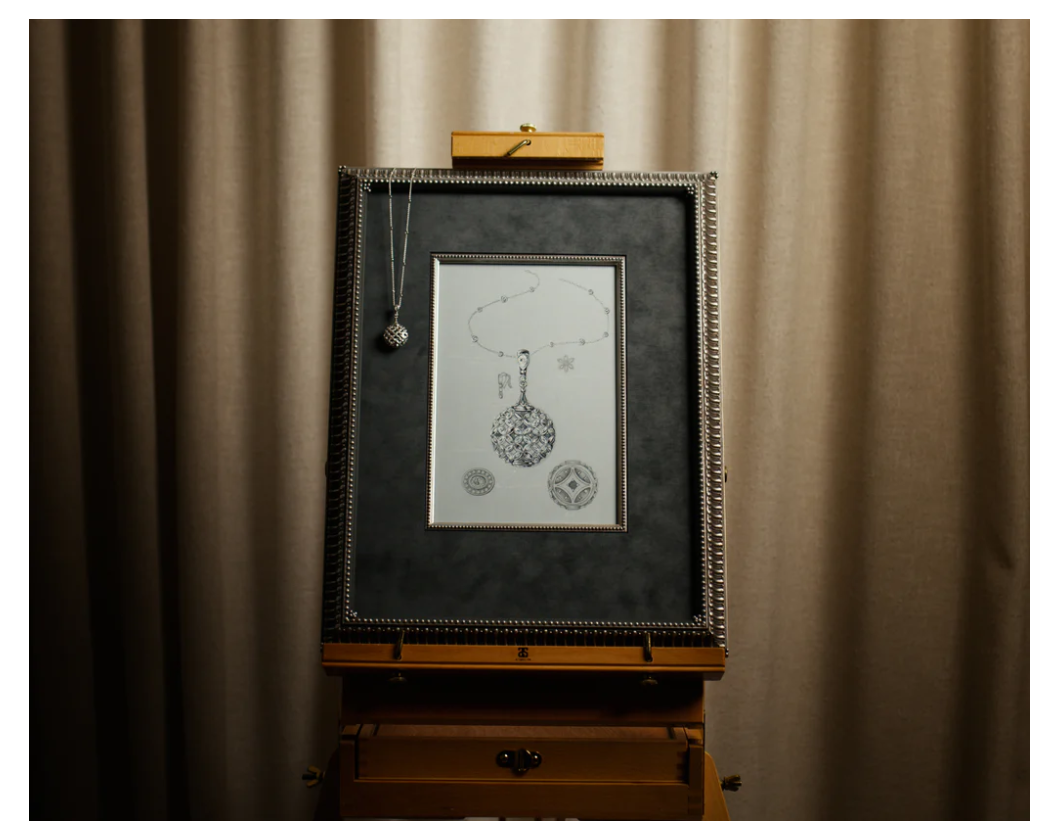
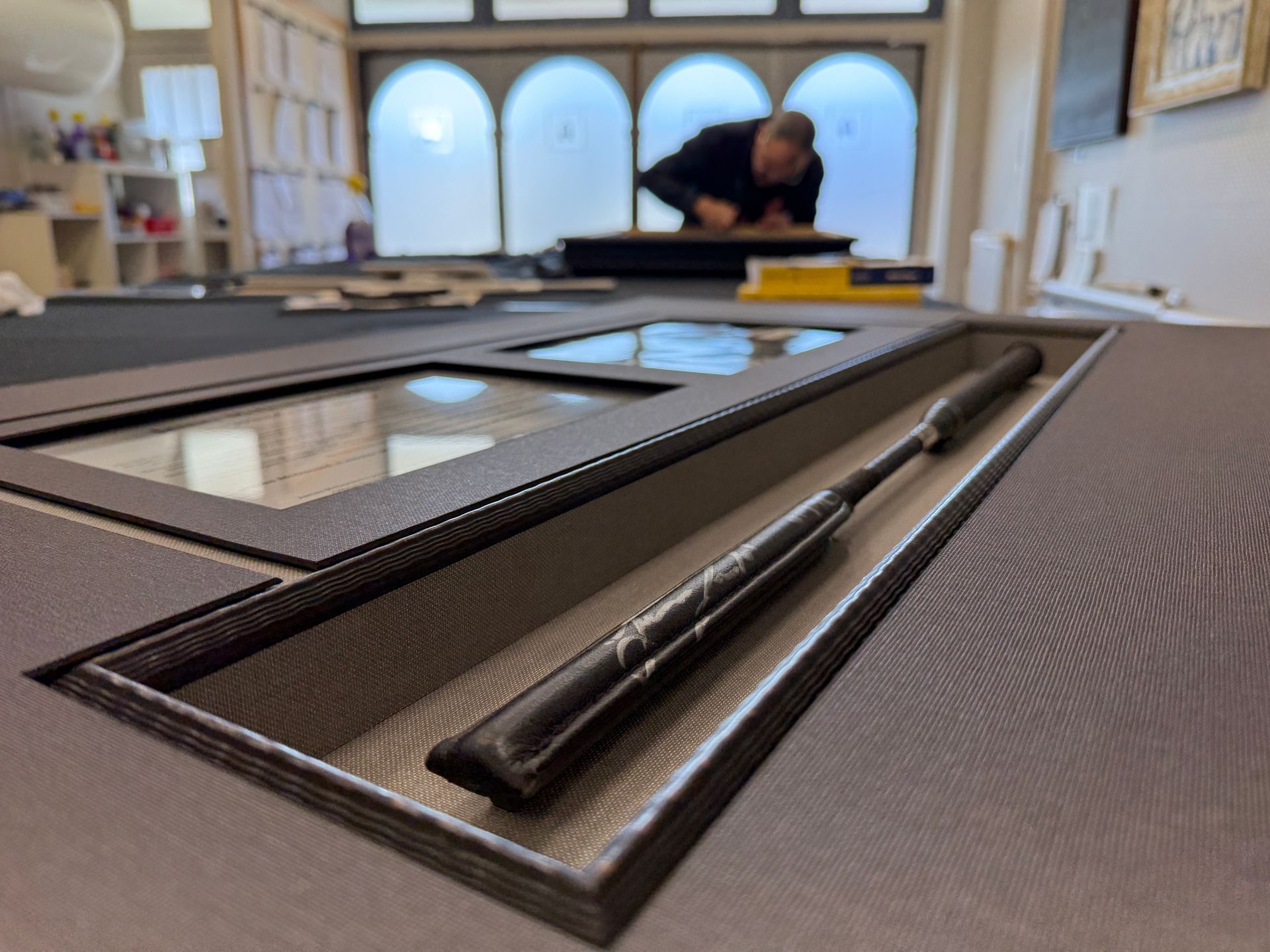
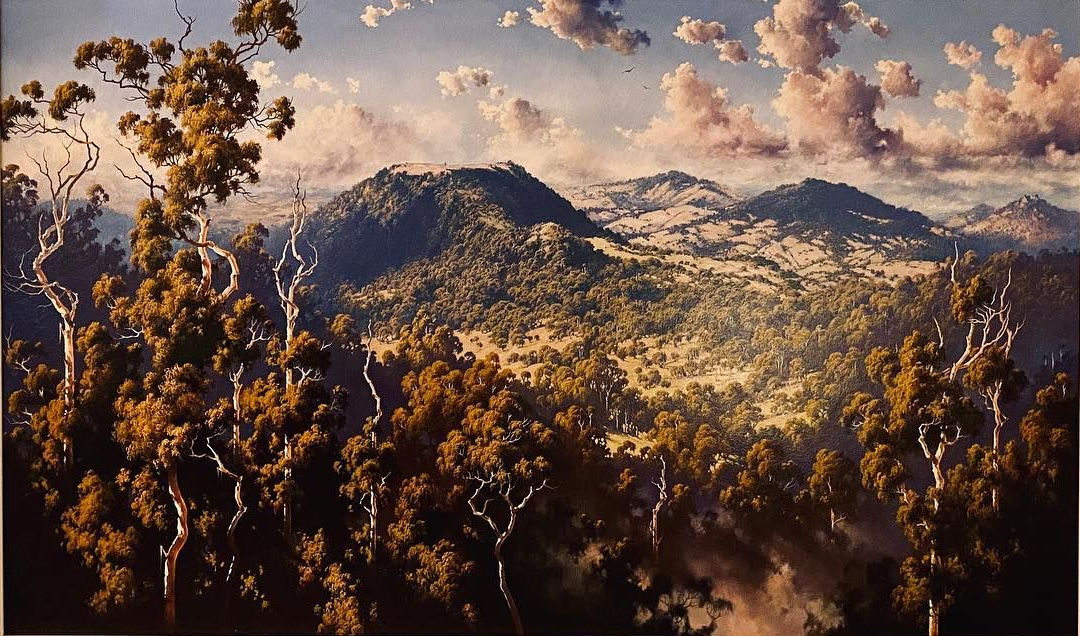
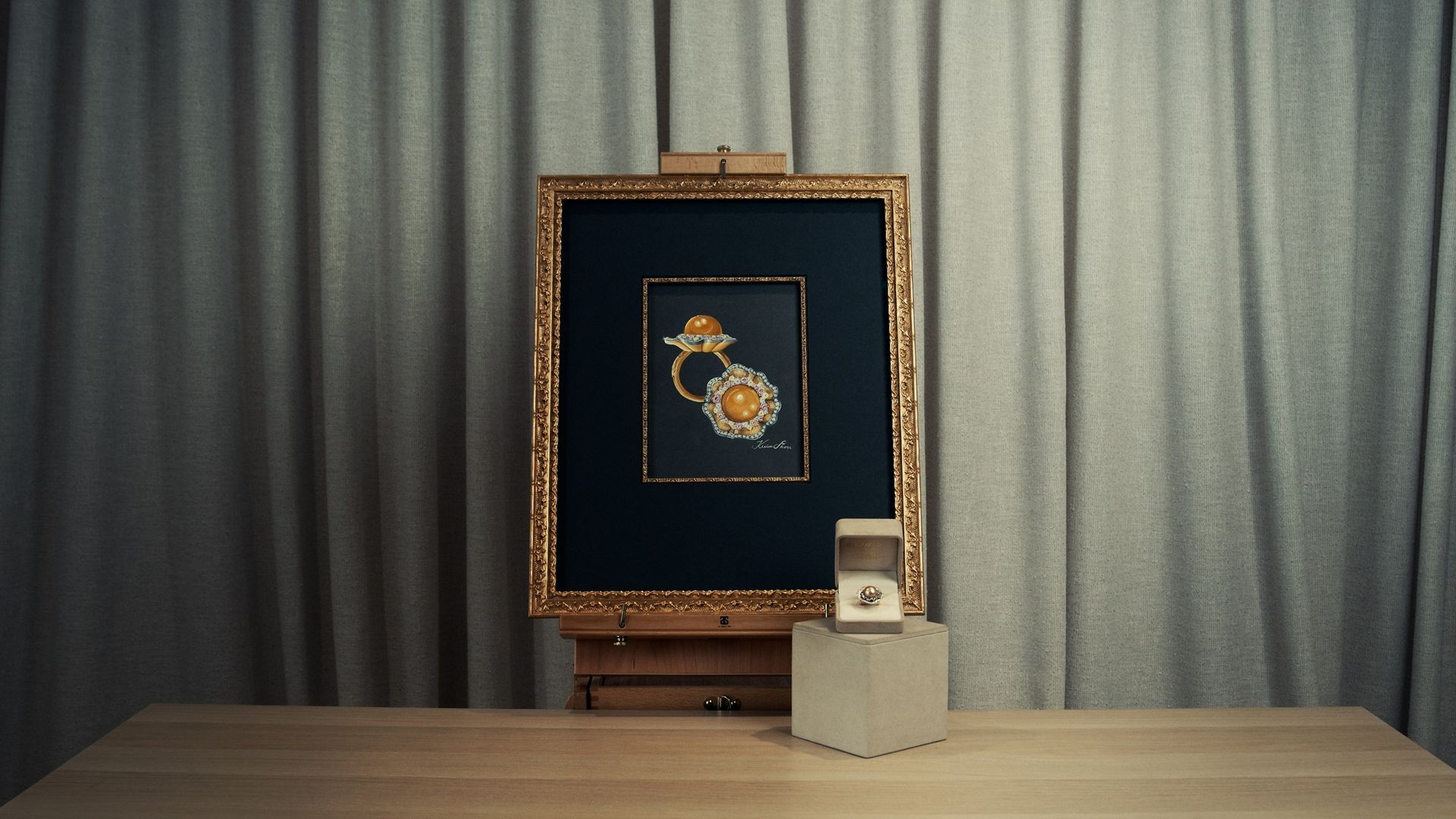
When an artwork or object is presented to our Toowoomba studio for framing, we know it represents far more than the materials it is made of. It might be a souvenir print or artwork collected on a special holiday, a painting or stitched textile made by an ancestor, a historical photograph, a handmade replica model, a hard‑earned professional certificate, an engineering blueprint or milestone artefact from a business’s archives, a family heirloom waiting to be honoured, or an Indigenous artwork carrying cultural knowledge and connection to Country.
Whatever form each piece takes, the piece arrives with a story. ARTSHOP’s role is to sympathetically and beautifully present — and preserve — that story with care.
Framing at its best, is thoughtful, unhurried, exacting work — historically and scientifically informed, ethically grounded and attentive to the details that shape how an artwork is seen and appreciated. Frames do more than hold an object; they contextualise it, protect it and find that subtle balance that supports the piece’s aesthetics and its voice.
What conservation framing is
Conservation framing is the method developed and used by museums, galleries and collectors to protect artworks and objects without altering their original condition. But you do not need to be a museum or gallery to use this highest standard of custom framing; most pieces we frame belong to artists and collectors who want their work not only presented beautifully, but also protected, or they belong to families who trust us with irreplaceable, deeply personal items.
A good friend of ARTSHOP's recently shared how she had her now-passed grandmother’s oil paintings reframed years ago, not realising the framing service she paid for was not conservation grade. The framing materials have since deteriorated, and climate fluctuations have left permanent marks on the artworks. These are ‘personally priceless’, one‑of‑a‑kind works, so this deterioration of pieces that connected our friend to her grandmother’s memory, is devastating. We are investigating some remedial actions for our friend; hopefully the ‘standard’ framing is reversible so the pieces can be reframed in the future using methods and materials that will be restorative.
Why conservation framing matters
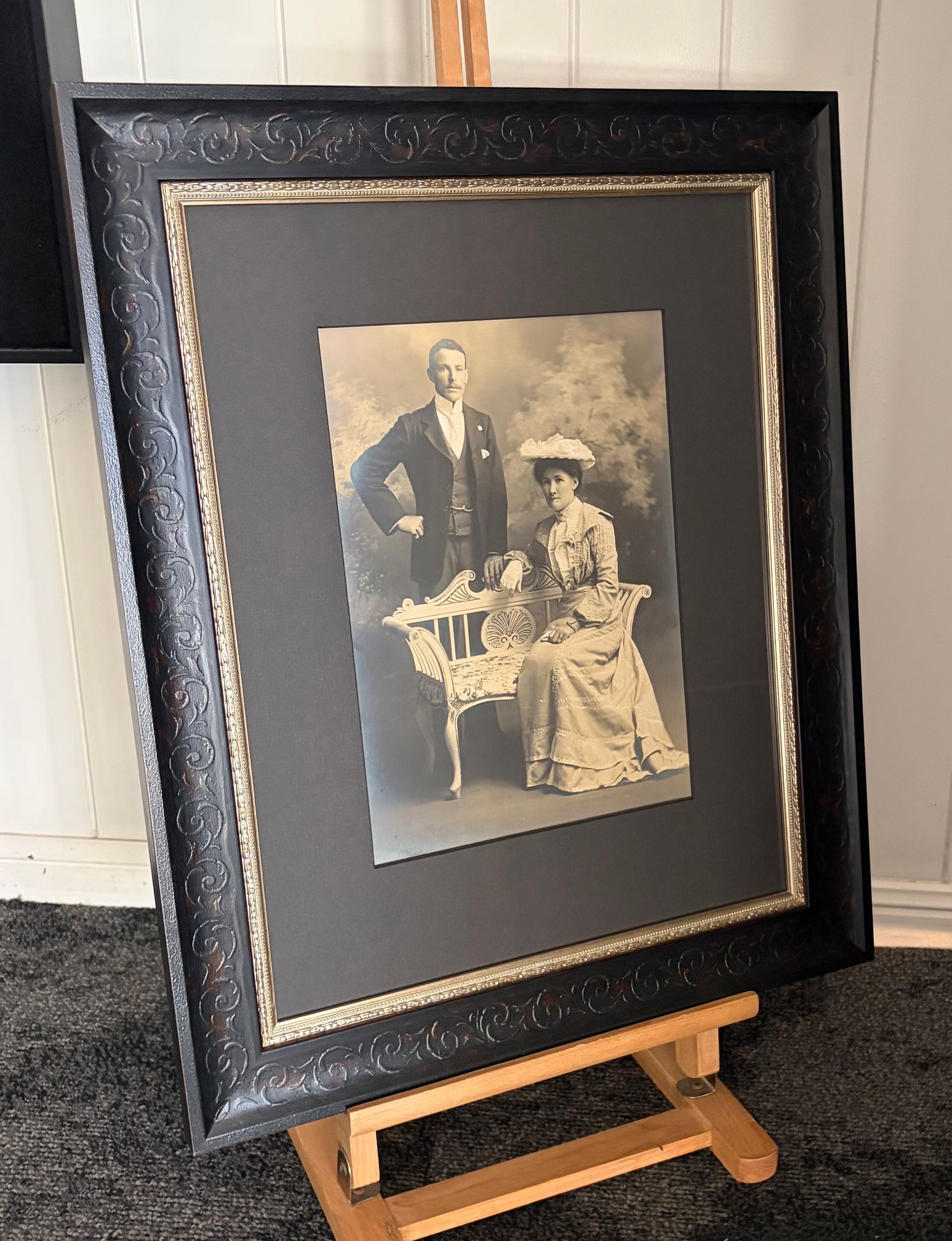
At ARTSHOP, conservation framing begins with assessing and understanding the artwork itself — its materials, its condition and its historical context. A nineteenth‑century antique piece behaves differently compared to a contemporary piece, and those differences influence the conservation choices we make. Understanding how a piece was made, handled and displayed across time helps us make aesthetic decisions that respect its story while also ensuring its long‑term preservation.
At times, a client brings us a historical or sentimental piece — such as an ancestral photograph or antique object — but wishes to frame it in a contemporary way that reflects the home or workplace where it will be displayed. These collaborative conversations are an important part of the design process. Conservation framing is not only about protecting the physical object; it is also about honouring how the client intends to live with it. Balancing the artwork’s history with the aesthetic of its new environment requires careful judgement and thoughtful material choices.
How conservation framing works
The way an artwork is held in place is just as important as the materials which surround it. Conservation framing uses reversible and pH-neutral mounting methods — no glues, pressure-sensitive adhesives or tapes that leave residue, stain the artwork or restrict its natural movement.
Works on paper need to expand and contract with changes in temperature and humidity. That is why we use conservation hinge‑mounting, which supports the artwork’s weight gently while allowing it to move as it needs to. The artwork is supported, not affixed, so it can be safely removed in the future without damage; this is especially important for pieces with historical or cultural significance.
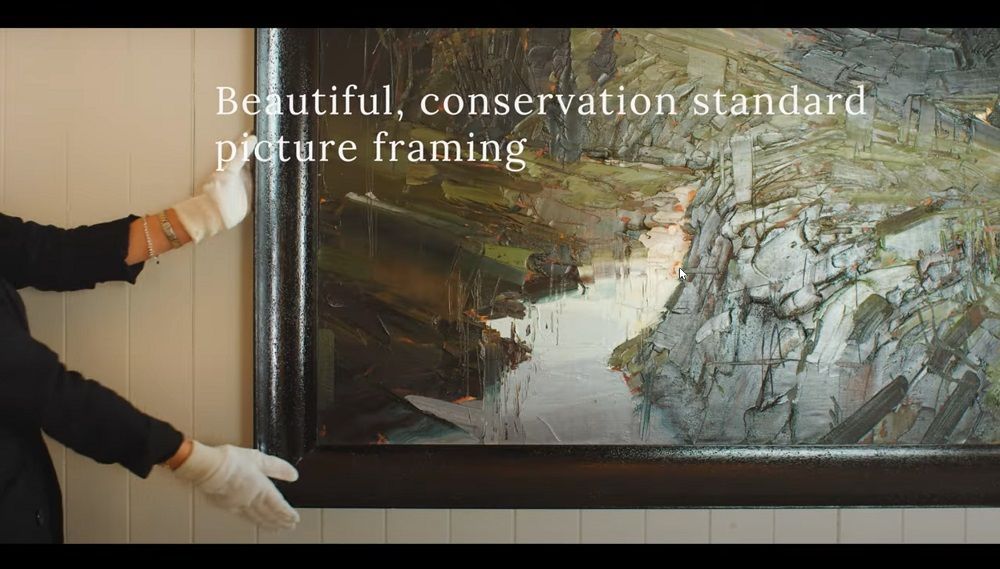
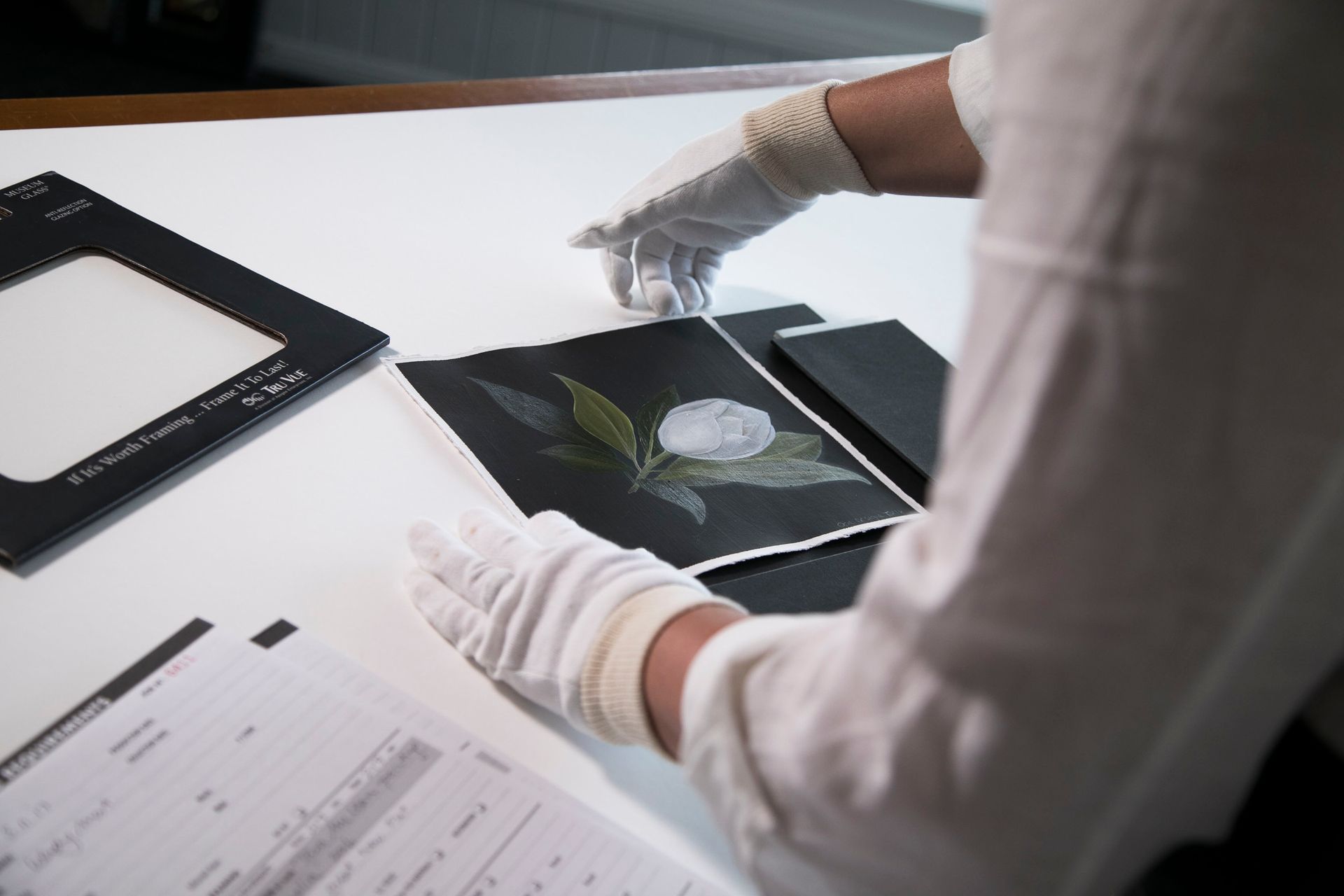
Throughout ARTSHOP’s conservation framing process for your piece, strict handling protocols are followed in our studio, including written and photographic documentation before, during and after treatment and framing. Cotton gloves, pH-neutral storage packing, dust‑free workspaces and atmospherically and bacterially controlled conditions ensure the artwork remains safe and pristine. Once the framing package is assembled, it is carefully sealed to protect against uncontrolled aspects of life beyond our studio, including dust, airborne pollutants and insects, helping to maintain a stable internal environment over time.
Key elements of conservation framing
Conservation framing is built on a series of thoughtful, interconnected choices.
PH-neutral, archival materials: Acidic or high-alkaline boards and commercial papers can cause yellowing and brittleness. Only pH‑neutral, archival‑grade materials support the artwork’s longevity and long‑term stability.
UV‑filtering glazing: Light damage is irreversible. Our Tru Vue ® UV‑filtering glazing options help protect delicate pigments, photographs, fabrics and works on paper from fading, aging and embrittlement.
Reversible archival mounting: We never use glues or pressure-sensitive adhesives that bond permanently. Reversible conservation-grade hinges suspend the artwork safely while allowing future removal without damage.
Space and correct support: Building adequate space and separation into the framing construction design is essential to ensure the artwork never touches the glazing, preventing moisture transfer leading to foxing or mildew, and surface adhesion or abrasion.
Sealing against contaminants: A properly sealed frame protects from dust, airborne pollutants and insects, whilst allowing adequate ventilation.
Humidity and temperature awareness: Environmental conditions play a critical role in preservation of artworks and objects. Our framing practices minimise risks associated with fluctuating humidity and temperature. We regularly consult and advise on appropriate measures for environmental stability in the home and collection venue.
What pieces can be conservation-grade framed?
Anything precious and meaningful to you should be framed to conservation standards. Works on paper, photographs, textiles, embroideries, certificates, maps, memorabilia, objects and canvases can all be preserved using conservation methods. Many pieces also carry historical or cultural significance, and understanding their context helps us choose the most appropriate approach.
[Scroll down to continue with the remainder of the article]
Why ARTSHOP is the Darling Downs’ conservation framing specialist
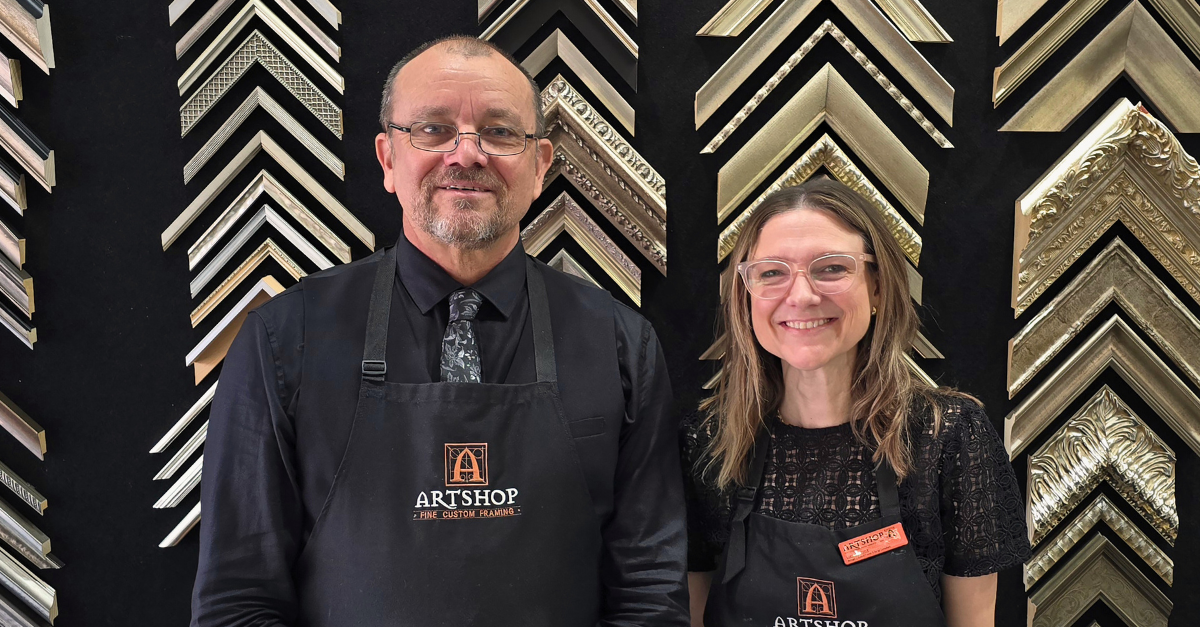
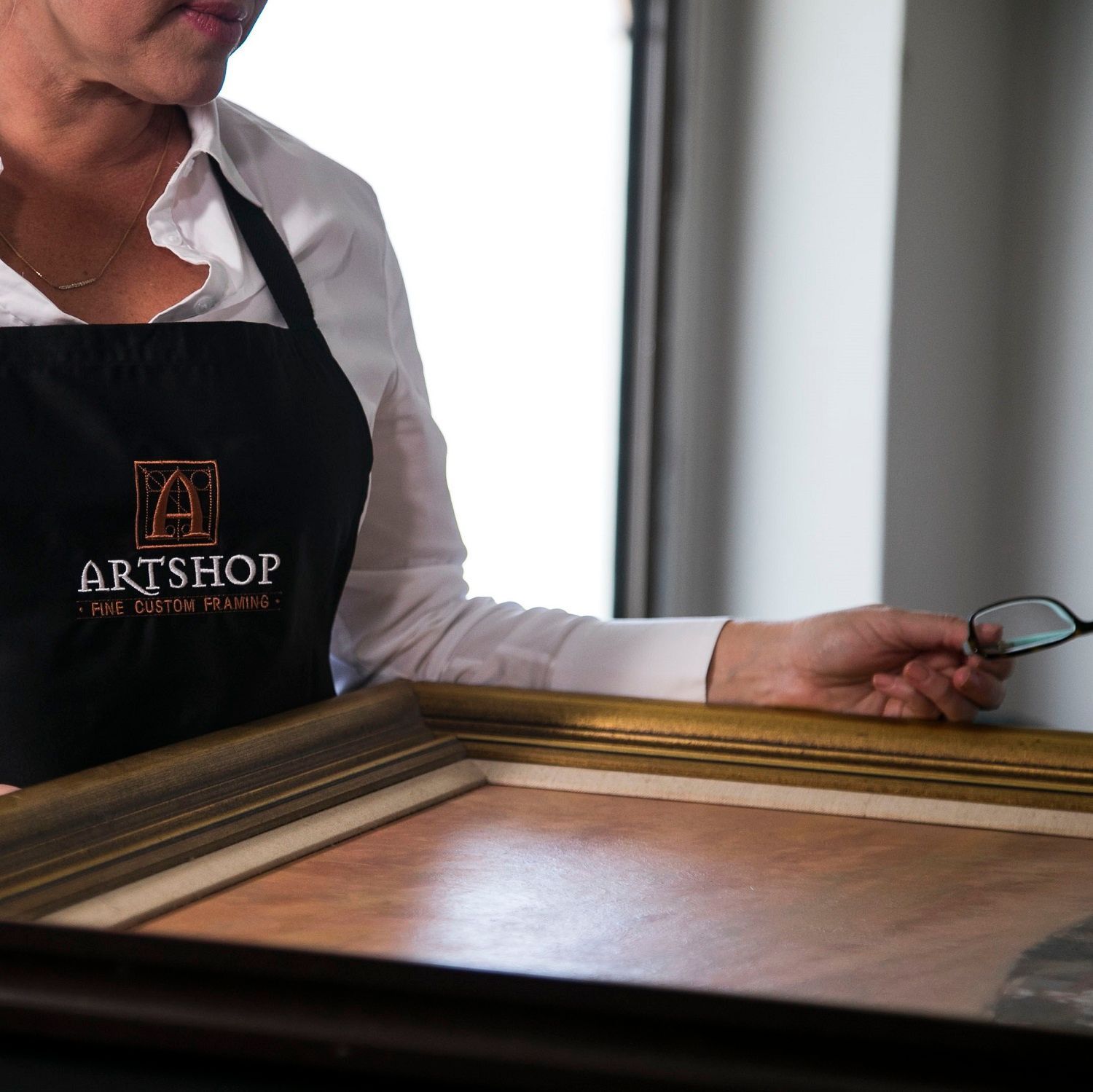
What sets ARTSHOP apart is not just the materials we use, but our philosophy, approach and sympathies. As members of the Australian Institute for the Conservation of Cultural Material (AICCM) and the Picture Framers Guild of Australia, we choose to recognise best‑practice conservation standards and bring decades of experience and care to every piece. We participate in professional development opportunities such as FRAME Symposium — an international gathering of conservation framers and conservators committed to sharing knowledge, refining technique and advancing the craft. These ongoing professional connections ensure our practice remains informed, current and aligned with the highest standards of preservation.
All ARTSHOP framing is completed in a carefully managed workspace, where clean handling environments and consistent conditions support the safe preparation of every artwork. These practices ensure that each project is handled with institutional levels of care.
Our commitment to delivering value underpins our practice. The combination of great design, excellent craftsmanship and adherence to conservation standards in custom framing, is increasingly rare. This same combination allows us to create frames that are both beautiful and preservation‑led and to operating a practice where every artwork or object is treated with the same care and respect.
Our approach begins with understanding the piece and the value you place in it, including its condition, its materials, its story and its history. Then we work with you to design a framing solution that complements the artwork aesthetically while ensuring it is fully protected. Our quality assurance processes ensure we deliver the same meticulous care we have built our reputation on since 1991.
Caring for your conservation‑framed piece
Conservation framing gives your art or heirloom the best possible start and helps ensure its longevity. Keeping pieces away from direct sunlight, heat and humidity, avoiding damp areas and gentle surface cleaning will support their preservation for years to come.
For clients seeking more detailed guidance, ARTSHOP's recent blog on caring for artwork in Toowoomba’s changing climate offers practical advice on managing humidity, airflow and UV exposure — all factors that critically influence how framed pieces age in their post-studio environments.
ARTSHOP also offers an advisory service for clients who would like tailored recommendations for their home or collection, as well as professional cleaning and inspection services for framed and/or unframed artworks.
Preserve what matters
Conservation: to keep from harm, decay or loss. Conservation-standard framing protects the stories that matter — the artworks, objects and memories that shape our lives. When something is worth keeping, it is worth preserving.
If you have a piece you would like framed or assessed, we welcome you to visit the ARTSHOP studio in Toowoomba or book a consultation. You can also write to us by email on framed@artshoptoowoomba.com.au with photos of your piece or call us direct on +61 (0)7 4639 2771. Our conservation framers will guide you through the best approach for your artwork, your space and your long‑term care needs.
Warm regards,
Cherylyn Russell
Director ARTSHOP
Fine Custom Picture Framing & Artwork Restoration
Toowoomba, Queensland, Australia